
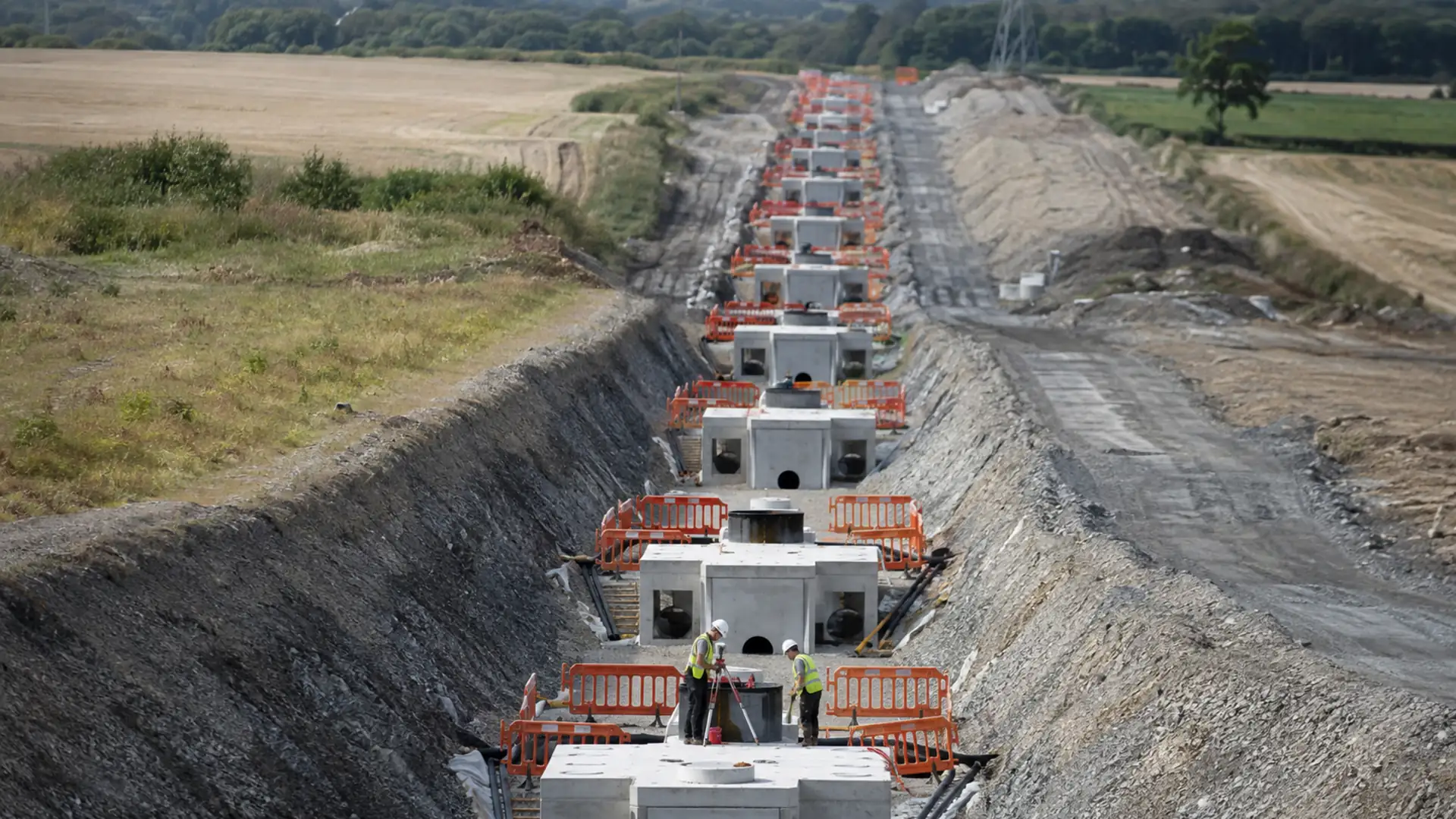
What you need to know
- You cannot trend what was never written the same way twice.
- Use the same fields on the site diary every shift.
- Rosie reads those entries so a variance is a number, not a feeling.
The Hidden Cost of Inconsistent Data
Walk into any construction company's head office and ask to compare labour productivity across three different projects. What you'll likely get is three completely different spreadsheets, using three different formats, measuring three different things.
One project manager tracks hours by trade. Another tracks by work package. A third tracks by subcontractor. All of them are technically measuring 'productivity' but none of them can be meaningfully compared.
This inconsistency isn't just frustrating, it's expensive. When you can't compare projects, you can't learn from them. When you can't learn from them, you repeat the same mistakes on every job.
What Standardisation Actually Means
Standardisation doesn't mean rigid bureaucracy or endless forms. It means agreeing on a common language for how you describe what's happening on site.
Standardised data answers four questions consistently:
- What happened? - Using agreed categories and terminology
- When did it happen? - With consistent time recording
- Who was involved? - Linking to resource databases
- What was the impact? - Measured in agreed units
When every site records information using the same framework, patterns emerge. You start seeing which subcontractors consistently deliver. Which weather conditions actually affect productivity. Which types of work always overrun.
The Decision-Making Advantage
Standardised data transforms reactive management into proactive leadership. Instead of waiting for problems to become crises, you spot warning signs early.
Consider a scenario: Three months into a major project, labour productivity drops 15% compared to the same project phase on your last three jobs. With standardised data, you can immediately investigate. Is it the workforce? The sequencing? The weather? The answers are in your data.
Without standardised data, you might not even notice the drop until the project is haemorrhaging money.
Building a Standardised Framework
Successful standardisation follows a simple principle: capture enough detail to be useful, but not so much that it becomes burdensome.
Start with your most valuable metrics:
- Labour hours by work type and trade
- Plant utilisation by equipment category
- Material deliveries and wastage
- Weather conditions and impact
- Delays and their causes
- Safety observations and near misses
Then agree on the taxonomy:
- What categories will you use for delay causes?
- How will you classify different work types?
- What constitutes 'productive' vs 'non-productive' time?
The specific answers matter less than everyone using the same ones.
Technology as an Enabler
Modern site diary software makes standardisation practical in ways that paper never could. Dropdown menus enforce consistent categories. Mandatory fields ensure nothing gets missed. Integration with other systems eliminates duplicate data entry.
But technology alone isn't enough. The best software in the world fails if people don't use it consistently. That requires training, buy-in, and visible leadership commitment.
From Data to Intelligence
Standardised data is raw material. Intelligence comes from analysis. When you can trust your data is consistent, you can build dashboards that actually mean something. Trend lines that reflect reality. Benchmarks that drive improvement.
The companies that win in construction learn fastest, not necessarily the ones with the lowest costs or the biggest teams, and learning requires data you can trust.
Making It Stick
Implementation is where most standardisation efforts fail. Here's what works:
- Start with pilot projects - Prove the value before rolling out company-wide
- Involve the people who'll use it - Site teams know what's practical
- Make it easier, not harder - If standardisation adds burden, it will be resisted
- Show the benefits - Share insights that wouldn't have been possible without consistent data
- Hold the line - Inconsistent enforcement kills standardisation faster than anything
The construction industry has historically relied on gut feel and individual experience. That worked when projects were simpler and margins were fatter. In today's environment, the companies that thrive will be those that turn their collective experience into institutional knowledge through standardised, comparable data.



.webp)