

What you need to know
- PACE cut the gates. It did not cut the need for a contemporaneous record.
- Keep the possession in the site diary that night. Do not wait for the next LoC review.
- Rosie reads those entries against NEC4 so a compensation event is found while the clock is running.
PACE was built for speed. Your commercial records were not.
Network Rail replaced GRIP with PACE to cut time and cost out of project delivery. Four overlapping phases instead of eight sequential gates. Decisions made by project teams instead of escalated through three layers of governance. The Dartmoor line went from concept to construction in eight weeks.
That speed is real. So is the commercial risk hiding inside it.
Because when phases overlap and decisions get made on site, the record of what changed, when, and why gets thinner. And on a Network Rail project, a thin record is an unrecovered cost.
If you have read GRIP vs PACE: what changed for Network Rail projects, you know the mechanics of the shift. This is the commercial sequel. What PACE actually does to your entitlement, and what to do about it before your final account.
The speed that helps delivery hurts your evidence
Under GRIP, the gate structure did your record-keeping for you.
Every stage had a defined set of deliverables. Every gate demanded sign-off before the next stage began. That rigidity slowed projects down, and everyone hated it. But it left a paper trail. When you needed to prove what was agreed at Stage 4, the gate review told you.
PACE removes the gates. Phases overlap. Design continues while construction starts. A change agreed verbally on Tuesday feeds into work that begins on Wednesday.
The delivery benefit is obvious. The commercial cost is quieter. There is no gate forcing a documented decision point, so the contemporaneous record now depends entirely on the discipline of the team making the change. On a fast-moving rail possession, that discipline is the first thing to slip.
Why this matters for entitlement on CP7 projects
Network Rail runs its enhancement and renewals work under NEC contracts. That does not change under PACE. The clauses that govern your money are exactly the same.
Which means the notification rule under clause 61.3 still applies. Clause 61.3 sets an eight-week time bar running from the Contractor becoming aware that the event has happened. It is not absolute. The bar does not apply where the event arises from the Project Manager giving an instruction or notification, issuing a certificate or changing an earlier decision, and it bites only on events the Contractor is obliged to notify. Check the contract form, any amendments and the facts before treating a notice as late.
Here is the trap. PACE accelerates the work. It does not accelerate your record-keeping. So you have more changes happening faster, with fewer natural documentation points, and the same hard time bar sitting underneath them.
Unrecovered change on a fast-moving scheme can be significant, but we are not aware of a published, methodologically sound figure for the proportion of events missed in manual diary review. Treat any such percentage, and any revenue figure derived from it, as unverified rather than an industry norm. PACE speed widens that gap, because the events pile up faster than a junior QS can process the diaries.
By the time you spot the pattern during final account preparation, the notice periods have expired. Your negotiating position has evaporated.
What good commercial record-keeping looks like under PACE
You cannot slow PACE down. So the record has to keep up with the speed instead.
Three things protect your position on a Network Rail project:
Capture the decision when it happens, not when you review the diary. Under PACE, the underlying change is often communicated verbally on site or absorbed into a design change mid-phase. Note that a spoken instruction does not by itself meet the NEC4 clause 13.1 requirement for a communication in a form that can be read, copied and recorded, so record it and seek it in writing. If it only exists in someone's memory, it does not exist. The diary entry, the photo, the timestamp, and the person who gave the instruction all need to land the same day.
Read every entry against the contract, not just for the record. A site diary that says "concrete delayed 2 hours, weather" is a filing note to most teams. To a commercial eye it is potential evidence worth investigating. Whether it supports a compensation event depends on the applicable ground and its conditions being met, not on the accumulation of diary entries alone. The value is in reading the entry commercially, every time, across every project.
Assume you will have to prove it 18 months from now. Rail disputes surface late. When Network Rail asks for backup on a variation from the last control period, you should not be hunting through site vehicles, four spreadsheets, and a Word doc called Final_FINAL_v3. The evidence should already be structured, linked, and searchable.
The common mistake: treating PACE as a delivery change, not a commercial one
Most rail contractors read PACE as a programme story. Faster phases, fewer gates, quicker delivery. They brief the planners and the project managers.
They forget to brief the commercial team.
So the QS function keeps working to a GRIP-era rhythm. Monthly diary reviews. Junior staff processing entries weeks after the event. Compensation events identified in arrears. That cadence was already leaking money under GRIP. Under PACE, the leak gets worse, because the pace of change outruns a monthly review cycle.
The contractors who protect margin under PACE are the ones who moved commercial record-keeping from monthly and reactive to daily and proactive. They stopped waiting for the final account to find out what they missed.
A rail example: the cumulative disruption you only see in the data
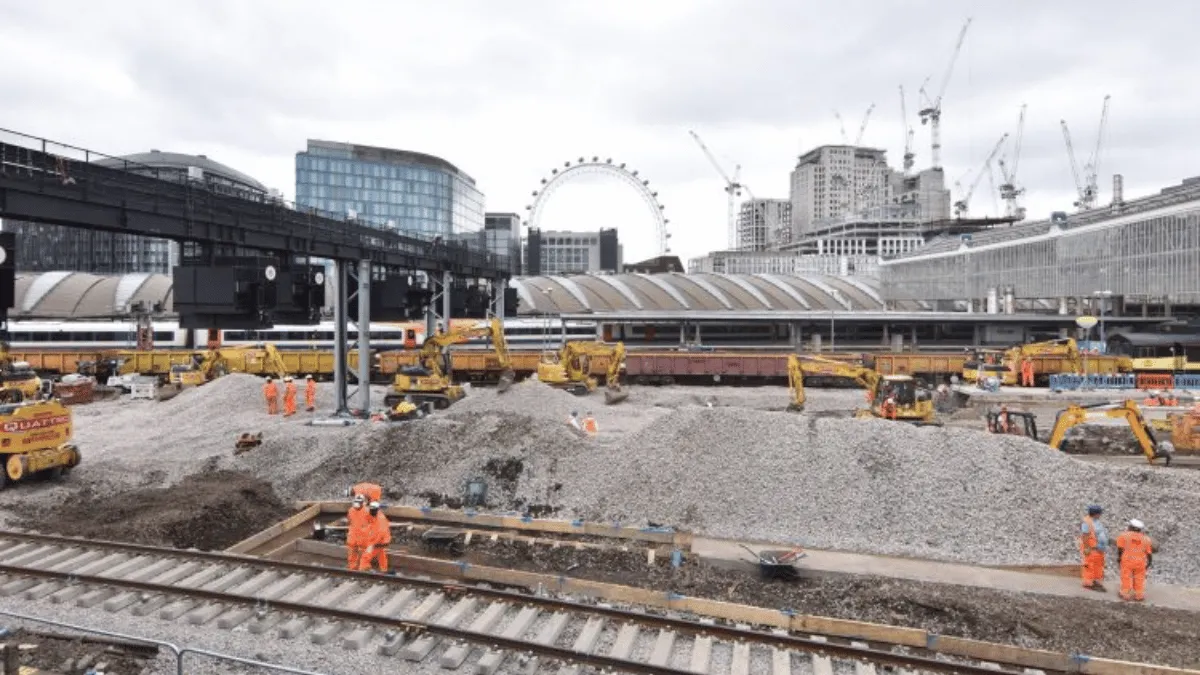
Picture a renewals scheme mid-phase under PACE. Design and construction running in parallel, as PACE intends.
Over six weeks, the site diary logs eleven separate short delays. A late materials delivery. A possession that overran. Two access restrictions. A revised design detail that arrived mid-shift. Each one looks minor. Each one gets filed and forgotten.
Read individually, none of them justifies a notice. Read together, they are a cumulative disruption pattern with a clear commercial trigger under NEC. That is a compensation event with real value attached.
A monthly manual review misses it, because the reviewer sees eleven small entries across six weeks, not one pattern. Something reading every entry the day it lands, against the contract, flags the pattern while the eight-week clock still has time on it.
That is the difference between recovering the cost and writing it off.
Frequently asked questions
Does PACE change your NEC obligations on Network Rail projects?
No. PACE changes how projects are governed and delivered, replacing GRIP's eight sequential gates with four overlapping phases. The NEC contract underneath is unchanged. The eight-week compensation event notification rule under clause 61.3 still applies, and the time bar is still absolute.
Why does PACE increase commercial record-keeping risk?
GRIP's formal gate reviews created natural documentation points. PACE removes them, so decisions get made faster and more often with fewer forced records. More change events happen in less time, against the same hard notification deadlines, which widens the gap between events that occur and events you actually capture and notify.
What is the biggest commercial mistake contractors make under PACE?
Treating PACE as a delivery change and not a commercial one. Teams brief planners and project managers on the faster phases but leave the QS function working to a GRIP-era monthly review cycle. That cadence cannot keep up with PACE speed, so compensation events get identified in arrears, after the notice period has closed.
How do you protect entitlement on a fast-moving rail project?
Capture the decision the day it happens, read every diary entry against the contract commercially rather than just filing it, and keep the evidence structured so you can prove it 18 months later. In practice that means moving commercial record-keeping from monthly and reactive to daily and proactive.
Can AI help with Network Rail PACE record-keeping?
Yes. An AI QS agent reads every site diary entry the day it is written, against your contract and baseline, and flags potential compensation events while the notice period is still open. It also surfaces cumulative disruption patterns across weeks of entries that a monthly manual review would miss. Rosie is a review aid: it surfaces candidate events and the records behind them for a person to assess. We do not publish a comparison figure against manual review, because we have no independently checked dataset to support one.
The bottom line
PACE gave Network Rail faster delivery. It also handed contractors a quieter commercial risk: more change, moving faster, with fewer natural records and the same notification duties.
You cannot slow the projects down. You can make sure your commercial records move at the same speed the work does. The contractors protecting margin under PACE are the ones who stopped waiting for the final account to find out what they lost.
Read the full GRIP vs PACE breakdown if you want the framework detail. Then look at how Rosie keeps your records moving at PACE speed.


.webp)