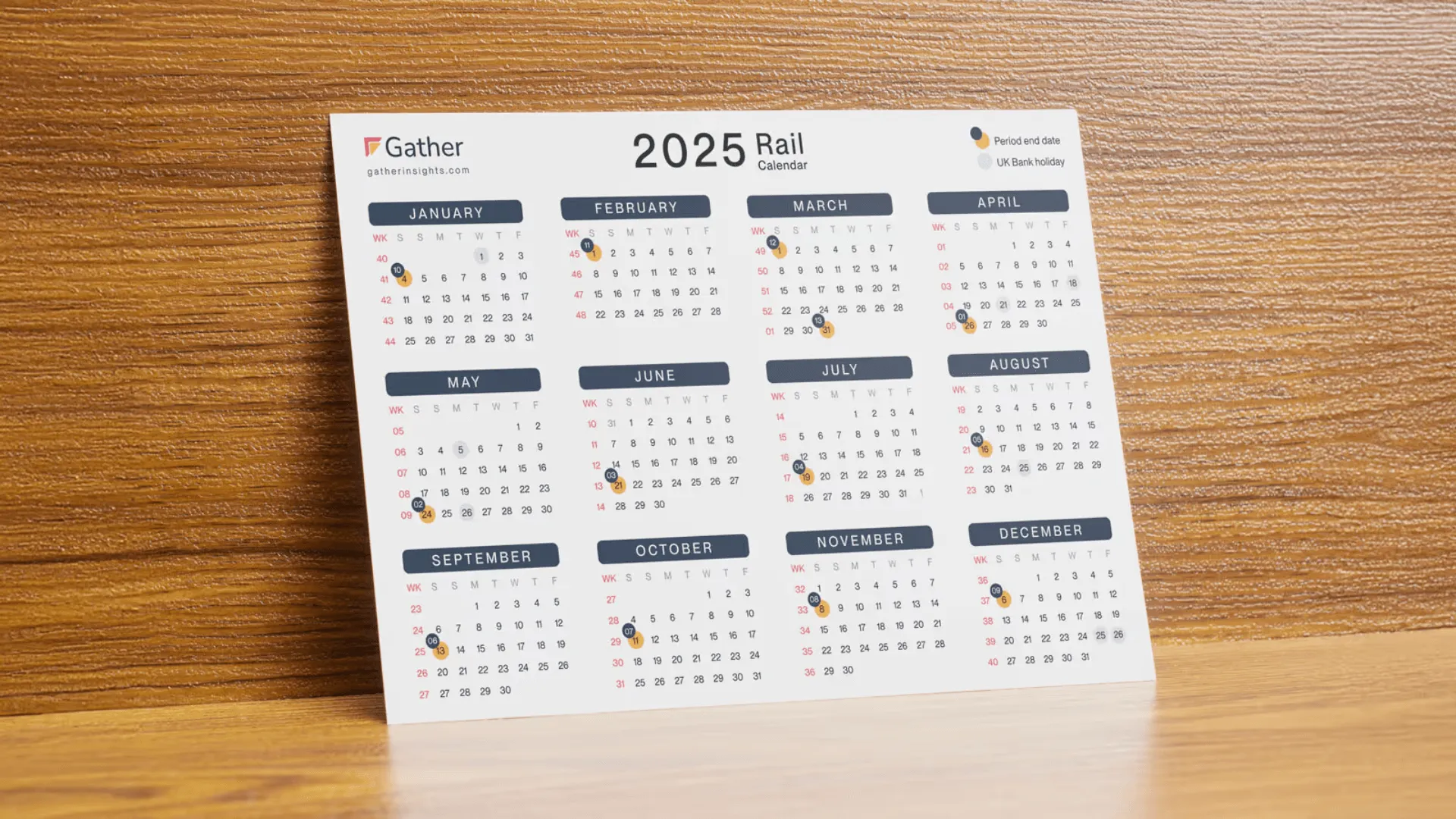
Every commercial manager working on Network Rail projects knows the rhythm: thirteen four-week periods, not calendar months. If you are not planning around them, you are already behind.
The Network Rail calendar dictates everything from possession windows to payment cycles. Miss a period deadline and you wait another four weeks. Get your programme out of sync with the rail calendar and your entire project schedule starts to drift.
We have created a printable 2025 Network Rail calendar to help your team stay aligned with the rail industry's unique planning cycle.
Download 2025 Rail Calendar
Our high-quality PDF is designed for A4 printing, ideal for your workspace. Download the calendar now.


Why the Network Rail Calendar Matters
Network Rail operates on a 13 period financial year, with each period lasting exactly four weeks (28 days). This system has been in place for decades and governs everything from financial reporting to possession planning.
For contractors, understanding the period system is not optional. Your payment applications, progress reports, and commercial submissions all align to period end dates. Submit a day late and you are waiting until the next period closes.
The calendar also determines when major possessions are scheduled. Christmas and Easter blockades, summer engineering works, and bank holiday possessions all follow predictable patterns based on the period calendar. Knowing these dates months in advance gives your planning team a significant advantage.
How the Calendar Affects Your Projects
Rail projects operate differently from typical construction work. You cannot just turn up and start working. Every activity requires a possession, and possessions are planned and allocated through a structured booking process that follows the period calendar.
Consider a typical scenario. Your project needs a 72-hour possession to complete critical track work. Network Rail allocates these possessions based on period cycles, often confirming dates 12 to 18 weeks in advance. If you are not tracking the period calendar, you risk missing booking windows entirely.
The commercial implications are equally significant. Under NEC4 contracts, your applications for payment follow the assessment date provisions in the contract data. On most Network Rail frameworks, these align with period end dates. Miss the assessment date and your cash flow takes a four-week hit.
Compensation events also follow period rhythms. The project manager's response periods, your quotation deadlines, and the contractual machinery all operate more smoothly when everyone understands where they sit in the current period.
Tips for Using the Calendar Effectively
Print copies for your site office, commercial office, and project management team. Having the calendar visible helps everyone stay aligned without constantly checking spreadsheets or databases.
Mark key dates at the start of each period. Payment application deadlines, programme submission dates, and CE notification deadlines should all be clearly visible. When your team can see the deadline approaching, they are more likely to hit it.
Cross-reference with your project programme. Your planner should map the period calendar onto the master programme so that key milestones align with possession windows and payment cycles. Nothing derails a project faster than discovering your critical path runs through a period when no possessions are available.
Share the calendar with your supply chain. Subcontractors working on rail projects need to understand the period system too. When everyone operates from the same calendar, coordination improves and disputes reduce.
Use period end dates for progress reviews. The natural rhythm of four-week periods creates ideal checkpoints for commercial reviews. Rather than arbitrary monthly meetings, align your CVR reviews and commercial health checks to period boundaries.
Common Planning Mistakes to Avoid
Do not assume the rail calendar matches standard months. Period 1 starts in April, but the period boundaries rarely align with the first of each month. This catches out teams who plan around calendar months rather than Network Rail periods.
Do not forget bank holiday impacts. Possessions around Christmas, Easter, and bank holidays are heavily contested. These are often the only times major work can happen, which means booking early is essential.
Do not ignore the financial year boundary. Period 13 ends in late March, and Network Rail's year-end processes can affect everything from payment authorisations to possession confirmations. Plan for potential delays during this transition period.
Possession dates only help if the diary matches them. Keep the site diary on the day, and let Rosie read it against the contract before the notice window closes.
Key Takeaways
- Network Rail runs 13 periods of 28 days, not calendar months. Period 1 starts in April. The first of the month is rarely the period end.
- Payment applications, CE clocks and possession bookings follow period ends. A day late is four weeks of cash.
- Print it, mark assessment dates, and keep the work that happened in that period in the site diary. Rosie reads those entries against the NEC4 contract before the next period closes.
Gather turns your site diaries into commercial evidence and flags compensation events before the eight week time bar closes. Book 15 minutes and see it run against one of your own projects.
Book a 15 minute demo



.webp)