
What you need to know
- A possession without a dated allocation is a shift the PM can ignore.
- Write it that night in the site diary.
- Rosie reads those entries against NEC4 so standing time is on the notice, not in a wash-up.
The Communication Challenge
Construction blockades compress work into concentrated periods. Teams operate at full capacity. Deadlines are absolute. Margins for error approach zero.
In this environment, communication failures cascade rapidly. A missed update becomes a misallocated resource. A delayed report becomes a missed milestone. What would be a minor issue in normal working becomes a significant problem when there's no slack in the schedule.
Strong reporting practices aren't optional during blockades. They're the difference between controlled delivery and expensive chaos.
Why Blockades Demand Better Reporting
The concentrated nature of intensive working amplifies communication importance in several ways:
Accelerated Consequences
Problems identified early can be addressed. Problems identified late trigger cascading failures. When work is compressed, the window between early and late shrinks dramatically. Reporting must be faster to remain useful.
Resource Competition
Multiple activities compete for limited resources during blockades. Without clear visibility of progress and needs, allocation becomes guesswork. The wrong resources end up in the wrong places.
Stakeholder Pressure
Blockades typically involve multiple stakeholders with high expectations and limited patience. Poor communication creates anxiety, erodes trust, and invites interference. Good communication maintains confidence and autonomy.
What Effective Reporting Looks Like
Reporting during blockades must be consistent, real-time, accessible, and actionable.
Consistent
Everyone uses the same format. Categories align. Metrics match. This standardisation enables comparison, aggregation, and rapid comprehension. When every supervisor reports differently, consolidation becomes interpretation rather than compilation.
Real-Time
Data captured as events occur rather than reconstructed at shift end. Real-time capture is more accurate, more useful, and more defensible. It enables intervention while intervention can still help.
Accessible
Information reaches those who need it without delay or filtering. Dashboards visible to all relevant parties. Reports distributed automatically. Nobody waiting for someone to compile and share what they need to know.
Actionable
Reports should curate insights, not just dump data. What's on track? What's at risk? What decision is needed?
Practical Implementation
Translating these principles into practice requires specific tools and habits:
Daily Progress Updates
Every work area, every shift, documented. Planned versus actual. Issues encountered. Forecast for next period. These updates aggregate into a real-time picture of overall progress.
Resource Tracking
Where is every person? Every piece of equipment? What's their utilisation? What's available? This visibility enables rapid reallocation when plans change.
Delay Documentation
When something goes wrong, capture it immediately. What happened? Why? What's the impact? What's the mitigation? This documentation serves immediate management and future claims.
Visual Dashboards
Data visualisation reduces complexity. Charts show trends that tables hide. Colour coding highlights status at a glance. Dashboards make information consumable for time-poor stakeholders.
Managing Stakeholders
Intensive working periods attract intensive stakeholder attention. Managing expectations requires deliberate communication strategy:
Agreed Intervals
Establish update cadence before the blockade begins. Twice daily? Shift end? What triggers immediate escalation? Clear expectations prevent both information overload and anxiety-inducing silence.
Tailored Content
Different stakeholders need different information. The client wants progress against milestones. The operations team needs resource availability. Supervisors need task-level detail. Create report variants that serve each audience.
Transparent Problems
Hiding issues erodes trust faster than the issues themselves. When problems arise, communicate them promptly with mitigation plans. Stakeholders can handle bad news. They can't handle surprises.
Measuring Blockade Performance
How do you know if a blockade succeeded? Cost and schedule matter, but deeper analysis reveals more:
Cost Per Progress Unit
Look at cost relative to output, not just total cost. Did the intensive working deliver proportionally better value, or did premium rates deliver diminishing returns?
Error and Rework Rates
Did the pressure create quality problems? Defects identified during blockade and in subsequent periods indicate whether speed came at the expense of quality.
Stakeholder Satisfaction
Did communication maintain confidence? Were relationships strengthened or strained? Post-blockade feedback reveals communication effectiveness.
A Real-World Example
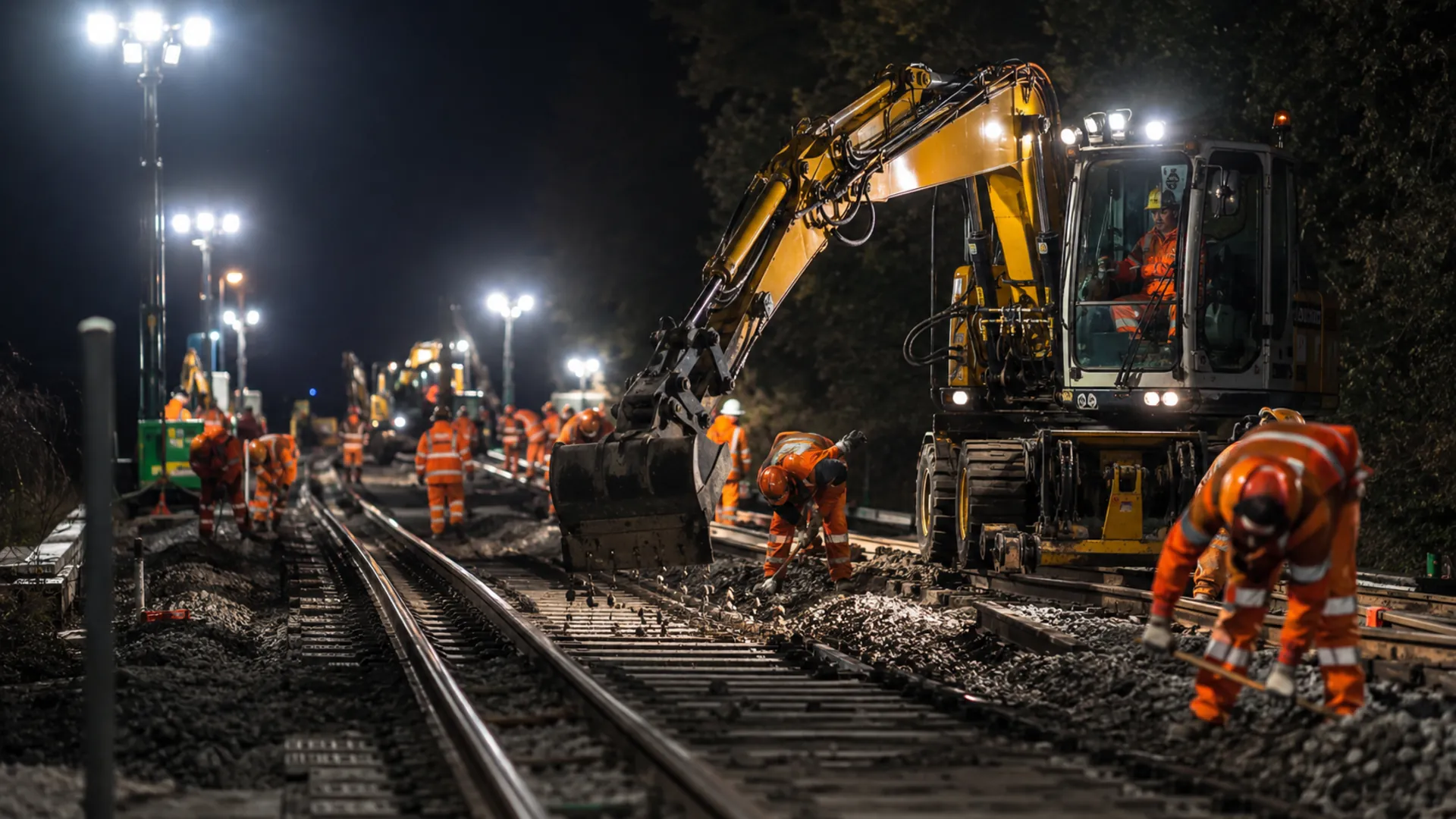
One contractor using real-time dashboards during a rail possession identified underutilised equipment midway through the blockade. A tracked excavator sat idle while another work area waited for equipment.
Real-time visibility enabled rapid redeployment. The result: £7,500 in avoided hire costs and a material shortage prevented. Without the dashboard, the equipment would have sat idle while the problem area improvised solutions.
Good reporting caught the problem early enough to fix it, with data clear enough to act on confidently.
What This Means for Your Projects
Blockade success depends on communication as much as capability. Teams that report clearly coordinate effectively. Teams that report poorly fight chaos rather than delivering work.
Invest in reporting systems before the blockade begins. Standardise formats. Train teams. Test dashboards. The time invested in preparation returns multiples during execution.



.webp)