
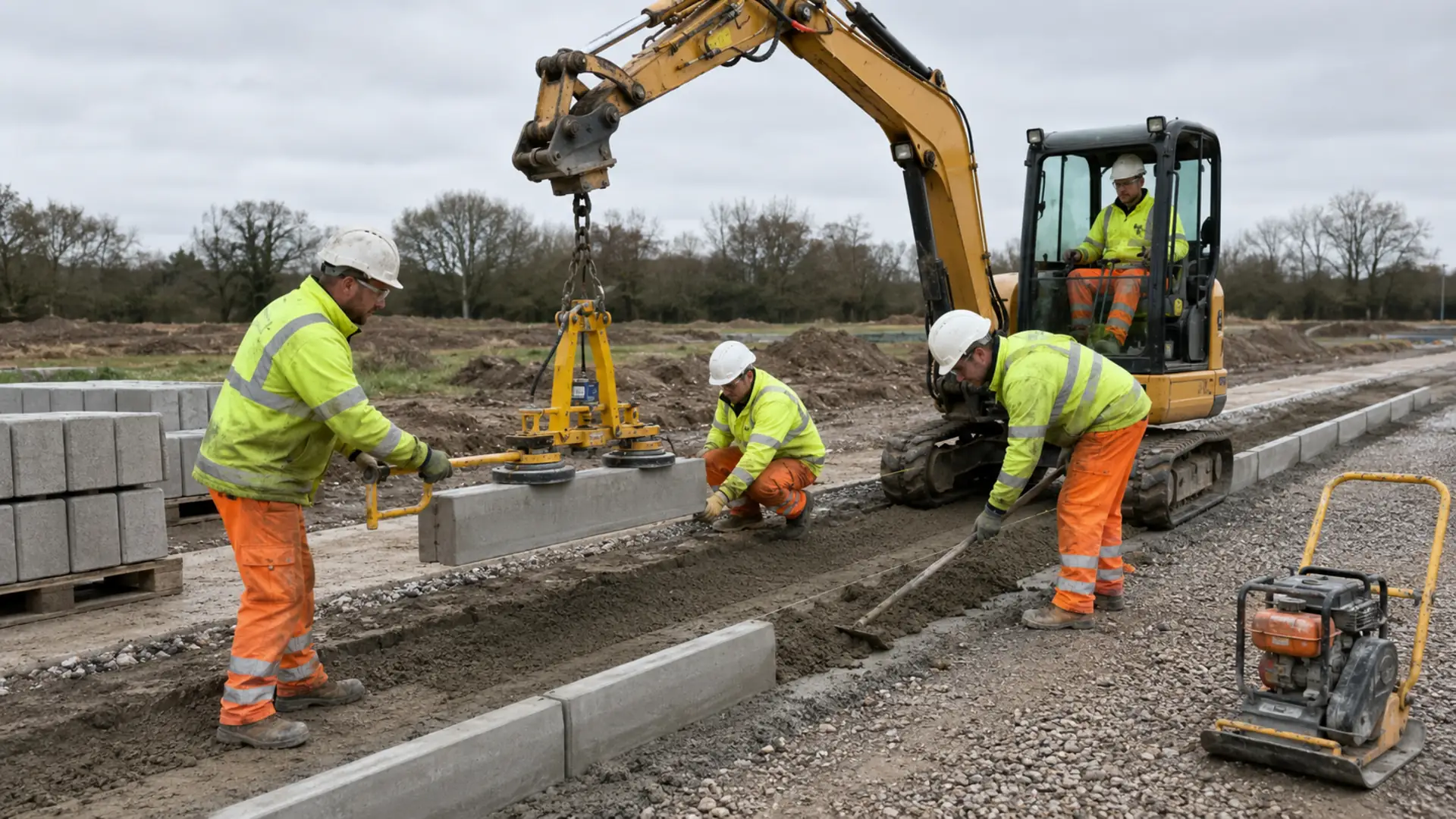
What you need to know
- Cost intelligence without that-day hours is a spreadsheet with confidence.
- Write the gang, the plant and the output on the site diary that shift.
- Rosie reads those lines so a rate movement is visible before the monthly meeting.
Why Your Diary Data Beats Spon's Every Time
Spon's data is outdated before it reaches your desk. It's six months old at publication and based on industry averages that may not reflect your operations. It cannot capture your night shift productivity, your specific weather impacts, or your crew's actual performance.
Your site diaries contain better data: real productivity figures from your projects, accurate costs reflecting your actual labour rates, and current pricing updated with every shift record.
Site Diaries as Data Goldmines
Daily records contain valuable intelligence that typically gets filed away unused:
- Labour data by trade - Hours worked, activities completed, productivity achieved
- Plant utilisation - Equipment deployed, idle time, actual usage patterns
- Material tracking - Consumption rates, wastage, delivery timing
- Progress metrics - Actual outputs against planned quantities
- Contextual factors - Weather, access restrictions, coordination issues
This information exists in most organisations. It just needs structure and analysis.
The Advantages of Internal Data
Real Productivity
These are your crews, your methods, and your equipment - the rates that actually predict your costs, not industry averages.
Accurate Costs
These reflect your labour rates, your preliminaries, and your overheads, not generic percentages that miss your specific situation.
Current Pricing
Updated continuously. Every shift record adds to the database. No waiting for annual publications.
Contextual Intelligence
Rates by project type, by season, by location, by client. Understanding why productivity varies, not just that it varies.
Predictive Capability
Patterns emerge over time. Which activities underperform? Which conditions cause delays? What does weather actually cost?
Building the System
The transformation requires consistent activity codes. Whether industry-standard CESMM or SMM7, or your own proprietary system. What matters is consistency across projects and over time.
Measure objectively. Metres installed. Cubic metres poured. Hours worked. Not subjective assessments of progress or effort.
Five-Step Process
- Capture - Record data daily, consistently, completely
- Structure - Use consistent codes and categories
- Validate - Check for errors and outliers
- Analyse - Calculate rates, identify patterns
- Apply - Use insights in estimating and planning
The Competitive Advantage
More Profitable Bidding
Price work based on actual performance, not optimistic estimates or generic benchmarks.
Earlier Problem Detection
Identify unprofitable work while there is still time to address it.
Stronger Negotiations
Substantiate claims and variations with evidence from your own records.
Better Resource Planning
Allocate people and equipment based on real productivity, not wishful thinking.
Faster Cash Flow
Agree variations quicker when your data supports your position.
Intelligence Compounds
The value increases daily. Each shift record adds to the database. Patterns become clearer. Predictions become more accurate. Competitive advantages compound.
In five years, you will either have a comprehensive cost intelligence system built from thousands of shift records, or you will still be relying on Spon's. Your competitors are making that choice now.
Starting Small
You do not need a perfect system on day one. Start with one activity category on one project. Prove the concept. Expand from there.
The hardest part is consistent data capture. Once that habit is established, the analysis follows naturally.


.webp)