
What you need to know
- The size of the governance process should roughly match the size of the risk. For a £19 a month licence, it rarely does.
- A committee reviewing an AI tool is really asking whether it trusts its own people. That is a management question, not a procurement one.
- There is a limit to the cost you can cut. There is no limit to the value you can add.
- Blocked QSs use the free version on their own phone anyway, which is the exact risk the committee was formed to prevent.
- Write a one-page policy in an afternoon, then give three people licences by Friday. Not a pilot.
Six weeks ago, someone in a Tier 1 commercial team asked if they could use Copilot. Six weeks later, there's a steering group, a risk register, a pilot proposal and still no Copilot licence. Meanwhile the QS who asked the question has been using the free version on their own phone the whole time.
The problem
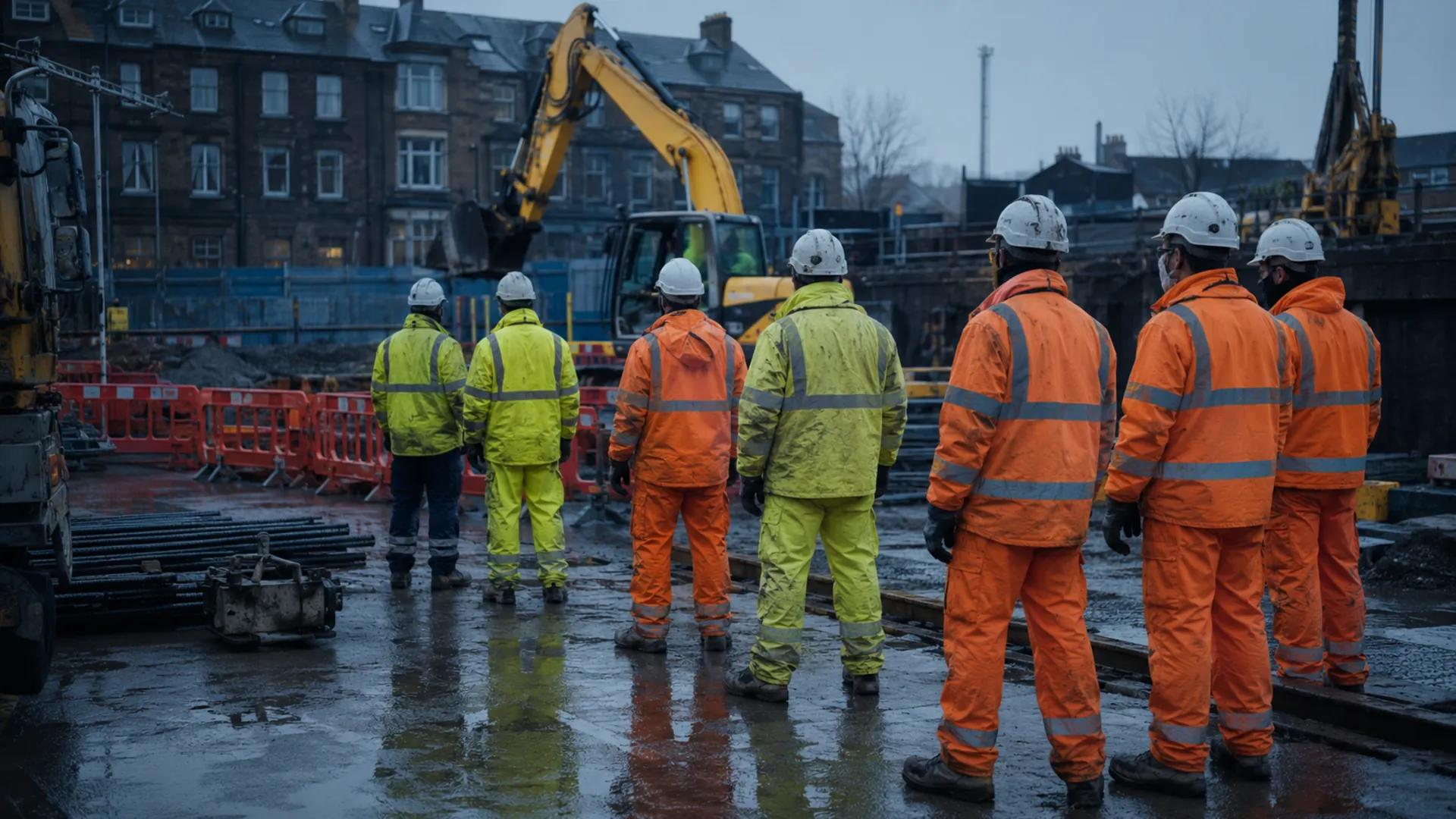
Construction is brilliant at governance and slow at decisions. Ask to expense a laptop bag and it's approved in an email. Ask to use an AI tool that costs less than a laptop bag and it needs sign-off from the CEO, a working group, and a slot on next quarter's digital transformation roadmap.
I've watched this exact pattern play out at three different contractors this year. Nobody is against AI. Everyone agrees it's coming. But agreeing something is coming and actually letting your team use it are two different things, and the gap between them is where the real cost sits.
Why this keeps happening
None of this is really about AI. It's about how construction handles anything new.
Fear of being the one who approved it. If a QS uses AI to draft a variation notice and it goes wrong, who signed off the tool? Nobody wants their name on that email, so nobody sends it.
Confusing the tool with the decision. A committee reviewing Copilot Pro is really trying to answer whether it can trust its people to use this sensibly. That's not a procurement question. It's a management question, and it already has an answer, because you hired these people and pay them to make judgement calls every single day.
Treating a £19 a month subscription like a capital project. I've sat in meetings about AI tooling with more attendees than the meeting about the site's temporary works design. The size of the process should roughly match the size of the risk. It rarely does.
The instinct to control rather than enable. Committees feel like progress. They produce minutes, actions, a sense that something is being managed. But a QS who can't open ChatGPT to summarise a 60-page spec isn't being managed. They're being slowed down, and they'll just do it on their own phone anyway, unmonitored and unsupported, which is the worst possible outcome for the exact risk the committee was formed to prevent.
The point that matters more than any of this
Forget the committee for a second.
There is a limit to the cost you can cut. There is no limit to the value you can add.
Cost cutting has a floor. You can strip out headcount, mileage, software licences, the lot, and eventually there's nothing left to strip. You hit zero, and you stop. Value creation has no such wall. Accurate cost to complete, claims caught before they become disputes, cash collected on time instead of chased for months, negotiations won because someone had the time to prepare properly. None of that has a ceiling. It never has.
So what is a two-month committee actually optimising for? Cost, risk, and not being the name on the email if something goes wrong. All things with a floor, while the thing with no ceiling sits untouched because nobody gave a skilled QS the tool to reach it.
Your QSs are skilled, and they're expensive for exactly that reason. The single most expensive thing you can do with that skill is spend it reformatting emails and copying numbers between spreadsheets, which is how most QS teams end up drowning in admin. Every week that licence sits unsigned is a week of unlimited upside traded for a rounding error of saved risk.
Stop managing the thing with a floor and start unlocking the thing without a ceiling.
What to watch out for
This isn't an argument for no governance at all. Data security, contract confidentiality, and what information goes into which tool absolutely need a clear policy, and from 9 March 2026 the RICS standard on responsible use of AI makes documented oversight a professional requirement rather than a nice-to-have.
The difference is speed. A sensible AI use policy can be written in an afternoon by someone who understands the risk, not assembled over two months by a committee that has never used the tools it's discussing. If your policy takes longer to produce than the tool takes to learn, the process itself has become the risk.
Try this today
Pick one AI tool your team is already asking about. The free version on someone's personal phone isn't the answer; that's the shadow AI problem the committee was supposedly formed to prevent. Get a proper paid plan with a data processing agreement in place, something like Claude Team, so contract and commercial data is covered by an actual agreement rather than a personal account's terms of service.
Write a one page policy covering what can and can't go into it, get it signed off by whoever actually needs to sign it off, and give three people licences by Friday. Not a pilot. Not a working group. Three licences, one week, real work, on a plan you'd be comfortable defending if anyone ever asked.
At Gather we see this pattern constantly in commercial teams trying to get more from their site records. The contractors moving fastest aren't the ones with the biggest AI strategy document. They're the ones who trusted a good QS to try something and told them to get on with it. No ceiling. No committee.



.webp)