For project managers

AI for Construction Project Managers: Tools, Applications, and What Actually Works

Construction project management is one of the most information dense jobs in any industry. This guide covers which PM tasks AI handles well today, which remain human jobs, and what to look for when evaluating tools.
01

What AI Can Actually Do for a Construction Project Manager

AI for construction project managers is defined as the application of artificial intelligence software to automate, assist, or augment specific project management tasks, including programme scheduling, cost performance monitoring, risk identification, contract obligation tracking, document analysis, and stakeholder reporting. There are no fully autonomous AI project managers in commercial deployment. Every tool on the market today targets a specific workflow, not the whole role.

That distinction is worth stating clearly, because the marketing around AI in construction tends towards breathless promises. I've seen vendor demos claiming "AI managed projects" that, on closer inspection, are project management dashboards with some predictive analytics bolted on. Useful? Often. Transformative? Only if you're doing the underlying work right.

The more useful framing: which parts of a PM's week involve processing large amounts of structured or unstructured data to produce an output, and how much of that can AI handle? The answer is more than most PMs currently use, and less than the vendors claim.

Two categories of AI tools exist for construction PMs:

AI assistant tools (copilots) augment the PM by surfacing information faster, drafting documents, flagging anomalies, and running analysis. The PM makes all decisions. These tools are mature, widely available, and provide clear ROI.

Autonomous AI agents take actions without explicit PM instruction: monitoring data streams, sending alerts, updating risk registers, flagging time bar risks in real time. These are newer, more powerful, and require careful governance. A PM on a live NEC4 project shouldn't have an AI agent sending notifications without human sign off; the professional and contractual implications are significant.

Most tools currently on the market sit in the copilot category. Autonomous agents are coming, but the governance frameworks are still catching up.

02

8 AI Applications for Construction Project Managers

These are the eight areas where AI creates the most practical value for PMs today, based on what's actually in use on UK construction projects.

1. Programme scheduling and delay prediction

AI scheduling tools ingest historical project data, similar project benchmarks, and current programme logic to generate schedule options and predict delay risk. Platforms like Nodes & Links and Oracle's AI assisted P6 features analyse float consumption, critical path shifts, and weather exposure windows. The most useful application isn't schedule generation; it's early warning. A PM doesn't need AI to tell them the current programme; they need AI to flag, three weeks in advance, that the earthworks logic is eroding and concrete pours are about to hit a constraint.

2. Cost performance monitoring and earned value analysis

AI monitors cost performance against the target or contract sum in real time, rather than waiting for monthly CVR cycles. Tools integrated with Oracle or Procore calculate earned value metrics, flag cost variance trends, and highlight work packages where the CPI is trending below 1.0. On Option C NEC4 contracts, this matters for pain and gain share calculations.

-12%

cost variance spotted in week 8 gives a PM options. The same variance spotted in week 22 does not.

3. Risk management and risk register maintenance

AI monitors project data streams, site records, subcontract correspondence, weather data, and supply chain alerts to identify emerging risks. Rather than a quarterly risk workshop producing a spreadsheet that nobody updates, AI maintains a live risk register and flags new items as they emerge. Several Tier 1 contractors are using tools like Tractable (for infrastructure risk) and Briq (for cost and schedule risk correlation). The PM reviews; the AI monitors continuously.

4. Contract obligation tracking

On NEC4, the Project Manager has contract defined obligations with specific response periods. AI tracks these systematically. Under clause 15.1, the Project Manager must attend early warning meetings. Under clause 62.6, the PM must respond to a CE quotation within 2 weeks (or the agreed period). Missing these deadlines has contractual consequences: a PM failure to respond to a CE quotation can be treated as acceptance of the Contractor's figures. AI makes sure these deadlines don't slip through during a busy month.

5. Document management and NLP search

Construction projects generate hundreds of thousands of documents. AI applies natural language processing to contracts, specifications, RFIs, meeting minutes, and site records to answer questions, surface relevant clauses, and identify conflicting instructions. A PM on a complex civils package might have 40,000 RFI responses across a three year project. AI search makes this navigable in seconds rather than hours.

6. Site progress monitoring via computer vision

AI powered computer vision analyses drone footage, site photographs, and fixed cameras to assess percentage complete against programme. Tools like OpenSpace and Holobuilder create georeferenced site records and compare current condition to BIM models. For a PM managing multiple work fronts, AI progress monitoring replaces walking the site with a clipboard and subjective estimates.

7. Site diary and daily report analysis

This is where AI creates the most direct commercial value for PM teams on NEC4 contracts. AI reviews site diary entries and cross-references them against contract obligations, flagging events that may require formal notifications or could support compensation event claims. On a busy infrastructure project, a site team generating 200+ diary entries per week cannot be read systematically by a PM. AI makes that analysis tractable and ensures nothing commercially significant is missed.

8. Stakeholder reporting and progress updates

AI generates progress reports, board packs, and programme updates from project data, rather than requiring the PM to manually compile information from multiple systems. A PM spending four hours per week on status reporting is a common pattern. AI assisted reporting can compress that to one hour of review and sign off, with the AI pulling figures from Procore, P6, and cost systems to populate the report structure.

03

NEC4: The PM's AI Priority

On NEC4 contracts, the Project Manager isn't just a coordinator. They're a contractual party with defined obligations, response periods, and commercial consequences for inaction.

AI for construction project managers on NEC4 projects needs to track both sides of the obligation ledger: what the PM must do, and what the contractor has done (or failed to do) that affects the PM's position.

The key NEC4 clauses that create PM obligations with time-bound consequences:

Clause 15.1 (Early warning meetings). The Project Manager must attend or appoint a representative for any early warning meeting. Failure to engage with the risk reduction process creates grounds for the Contractor to argue that the PM's inaction compounded the impact of a notified risk, affecting the CE assessment.

Clause 62.6 (CE quotation response). If the Project Manager fails to respond to a Contractor's compensation event quotation within the required period, the Contractor may give notification that the PM has not replied. If the PM still doesn't respond within 2 weeks of that notification, the quotation is treated as accepted. This is a significant contractual consequence of administrative delay.

Clause 31.3 (Programme acceptance). The Project Manager must accept or reject an Accepted Programme submission within 2 weeks. A failure to respond is not deemed acceptance; the PM should notify the Contractor of non-acceptance with reasons. In practice, PMs who don't track these deadlines leave programmes in limbo, which creates arguments about float and float ownership.

Clause 13.1 (Communications form). NEC4 requires all communications to be in a form that can be read, copied, and recorded. This is basic but routinely missed on projects where PMs rely on verbal instructions or WhatsApp messages. AI audit trails ensure that PM communications meet this standard and are stored with timestamps.
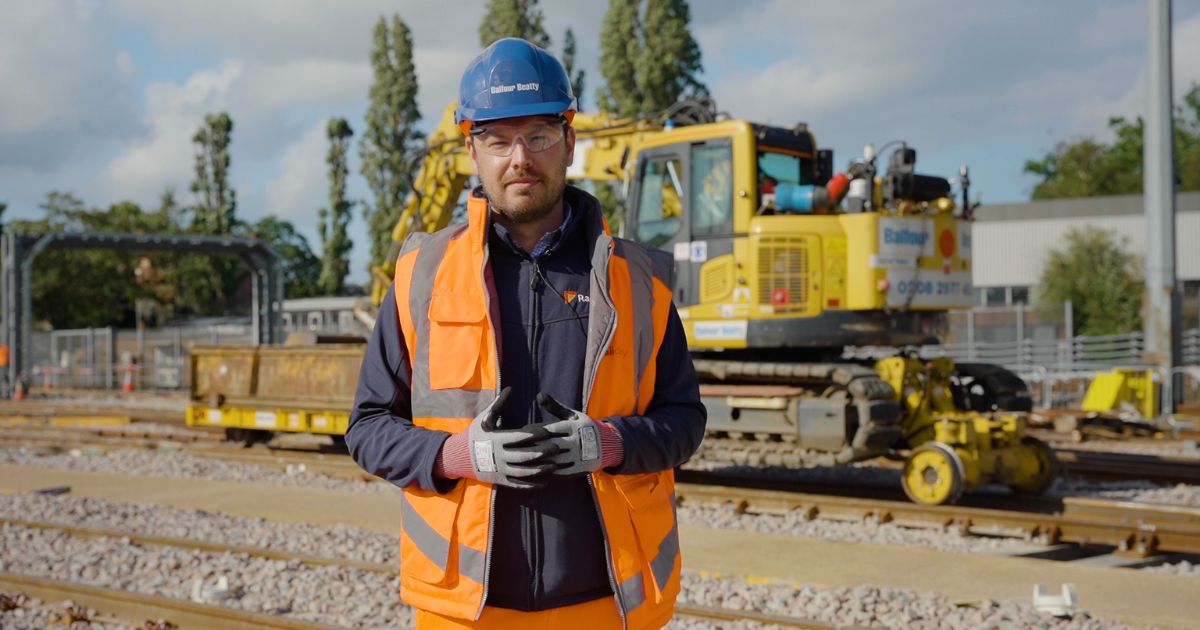
Gather QS AI Agent surfacing compensation event triggers from site records
Gather's QS AI Agent tracking obligation deadlines and CE triggers from site records.
Worked example: PM obligation tracking on a rail electrification package£38M · NEC4 Option C · North West

On a £38M NEC4 Option C rail electrification package in the North West (started March 2025), the Project Manager's commercial team was managing 34 open compensation events simultaneously in months 4 through 7. The PM had a strict internal rule: all CE quotation responses within the contracted 2 week period. In practice, the volume and the day to day programme pressure meant that three CE quotations issued in May 2025 had not received PM responses by the deadline dates in early June.

Under clause 62.6, the Contractor notified the PM on 9 June 2025 that no responses had been received. The PM team had 2 weeks to respond. With AI tracking open CE deadlines against quotation issue dates, the team identified all three on the morning of 10 June, responded by 19 June, and avoided deemed acceptance on two of the three (one had a credible entitlement; the PM's assessment was lower than the quotation). Without deadline tracking, those three events would likely have been treated as accepted quotations, adding approximately £95,000 above the PM's assessed values.

The flip side matters too. Gather's AI reviews site diaries and project records to identify instances where the Project Manager has failed to respond within required periods, triggering the deemed acceptance mechanism under clause 61.4 (PM fails to issue CE instruction within 8 weeks) and clause 60.1(9) (PM withholds an acceptance the contract required them to give). Those failures create compensation events or quotation acceptance positions in their own right.

Open compensation events, months 4 to 734
CE quotations past PM response deadline3
Deemed acceptance avoided2 of 3
Above assessed value avoided£95,000

Lesson: the deadlines were contractual and non-negotiable. The gap was a tracking system that could keep up with 34 concurrent CEs.

For more on AI assisted compensation event detection from the contractor's perspective, see the AI compensation event detection guide. For the NEC4 contract framework itself, the NEC4 guide and the NEC4 programme management guide cover the underlying mechanics.

04

NEC4 PM Obligation Reference Table

Key NEC4 ECC obligations where AI tracking prevents missed deadlines.

ClauseObligationTime LimitConsequence of Failure
13.1All communications in readable, copyable, recordable formOngoingCommunication may be invalid; audit exposure
15.1Attend early warning meetings (or appoint representative)Per meeting dateWeakens PM's position on risk reduction assessment
31.3Accept or reject Accepted Programme submission2 weeks from receiptProgramme limbo; float ownership disputes
62.3Respond to CE quotation2 weeks (or agreed period)Deemed acceptance risk if Contractor notifies non-reply under 62.6
62.6Respond after Contractor notifies PM non-reply2 weeks from notificationQuotation treated as accepted
61.4Issue or refuse CE notification8 weeks from PM's own CE notificationContractor's compensation event proceeds
64.3Notify own assessment of CE3 weeks from expiry of Contractor's quotation periodCE assessment becomes contractor's quotation

These deadlines stack. On a project with 20+ active CEs, tracking them manually in a spreadsheet is possible; doing it reliably under programme pressure is a different matter.

05

What AI Cannot Do for a Project Manager

This section matters as much as the applications list. Honest assessment of AI limitations is more useful than a sales pitch.

AI cannot negotiate. Commercial negotiations with a client, employer, or major subcontractor require relationship reading, concession strategy, and real-time judgement about what the other party will accept. AI can give you a briefing pack. It can't sit across the table.

AI cannot interpret ambiguous contract language in context. A disputed Z-clause that two parties have interpreted differently for 18 months is not a document analysis problem. It's a commercial and legal problem that requires professional judgement, knowledge of the parties' intentions, and often external advice. AI can tell you what the clause says; it can't tell you what it means in the context of this specific project and these specific parties.

AI cannot build team relationships. A PM's effectiveness often comes down to trust: the client rep who picks up the phone at 6pm, the subcontractor PM who flags a problem before it becomes a crisis, the designer who goes the extra mile on a tricky interface. None of that happens through software.

AI cannot exercise professional judgement under uncertainty. The hardest PM decisions involve incomplete information, competing pressures, and genuine uncertainty about outcomes. Deciding whether to call a delay as weather-compensable or absorb it commercially. Deciding whether to push back on a client's instruction or maintain the relationship. AI can provide analysis to support those decisions, but it cannot make them.

AI cannot take professional responsibility. Under the RICS standard on responsible AI use, the qualified professional is responsible for AI-assisted outputs. If an AI flags a compensation event and the PM authorises the notification without proper review, the PM owns that decision. AI is a tool, not a defence.

The PM role that remains irreducibly human: exercising professional judgement with incomplete information, under time pressure, with commercial and relational consequences. That's not going away.

06

Evaluating AI Tools: What a PM Should Actually Ask

Most AI vendors will tell you their tool is game-changing. Here's what to ask instead.

Integration. Does it connect to the project management software you actually use? A risk monitoring tool that requires manual data entry every week will not be used. Look for native integrations with Procore, Oracle Primavera P6, Asta Powerproject, and Viewpoint. If integration requires an expensive consultancy engagement, factor that into the total cost.

Accuracy and false positive rate. For any AI that flags alerts (CE triggers, programme risks, budget variances), ask what the false positive rate is. A tool that generates 40 alerts per week and gets it right 60% of the time creates more work, not less. The PM team stops trusting it after three weeks. Ask for accuracy data on a project comparable to yours in size and contract type.

Human review workflow. How does the AI present its output for human review? Is there a clear sign-off step before AI recommendations become actions? For RICS-compliant practice, this is non-negotiable. AI-generated outputs used in professional practice need a documented human review step. Tools that bypass this create professional risk.

Data ownership and GDPR. Who owns the project data you upload? Where is it stored? Can the vendor use your project data to train their models? These questions matter for commercially sensitive NEC4 projects. Standard platform terms often reserve broad rights to use customer data; get explicit contractual carve-outs for confidential project information. I've seen PMs sign up for tools on a credit card without anyone checking the data terms. That's fine for a task management app. It's not fine when you're uploading NEC4 contracts and site records containing commercially sensitive information.

Construction-specific training. Generic AI tools (ChatGPT, Gemini, Copilot) have broad capabilities but are not trained on NEC4 contract mechanics, UK construction industry data, or the specific commercial patterns of infrastructure projects. Construction-specific AI tools have narrower scope but higher accuracy on the tasks that matter. A PM evaluating AI tools should distinguish between these two categories. A generic LLM will cheerfully tell you that clause 62.6 gives the contractor 2 weeks when it's actually the PM who has 2 weeks. That's the kind of error that creates problems when someone acts on it.

For a comparison of specific AI tools available in the UK construction market, see the AI in construction guide. For RICS compliance requirements, see the RICS AI standard guide.

Frequently Asked Questions

What is AI for construction project management?

AI for construction project management refers to software tools that use artificial intelligence to automate or assist specific PM tasks: programme scheduling, cost performance monitoring, risk management, contract obligation tracking, document analysis, and reporting. Current tools target specific workflows rather than replacing the PM role. The PM remains responsible for professional judgement, commercial negotiation, and decision-making under uncertainty.

Can AI replace a construction project manager?

No. AI can automate specific data-processing tasks within the PM role, but it cannot negotiate, build stakeholder relationships, interpret ambiguous contractual language in context, or exercise professional judgement under uncertainty. The RICS professional standard on responsible AI use (September 2025) makes clear that qualified professionals remain responsible for AI-assisted outputs. The PM role is augmented by AI, not replaced by it.

What AI tools do construction project managers use?

UK construction PMs are currently using AI across several categories: scheduling tools (Nodes & Links, Oracle AI-assisted P6), cost monitoring (Briq, Procore analytics), risk management (Tractable), computer vision progress monitoring (OpenSpace, Holobuilder), document analysis (Luminance, Kira), and NEC4 commercial record analysis (Gather). Tool adoption varies significantly by contractor size and project type; Tier 1 contractors are further ahead than SME contractors.

How does AI help with NEC4 project management?

On NEC4, AI tracks PM response obligations against contractual time limits (clauses 15.1, 31.3, 62.6), monitors site diary entries for potential compensation event triggers, and maintains a live view of open CE notifications and their deadlines. For the contractor, AI also identifies instances where a PM failure to respond constitutes a compensation event under clause 60.1. The primary value is ensuring that time-bound obligations on both sides are visible before deadlines expire.

How much time can AI save a construction project manager?

Based on typical Tier 1 contractor deployments, PMs working on projects above £20M report time savings in the range of 3 to 6 hours per week when AI is applied to reporting, risk monitoring, and document search. On NEC4 projects with high CE volume, the commercial value of AI-assisted notification tracking typically exceeds the subscription cost by a significant margin, even before factoring in PM time savings.

Does using AI for project management comply with RICS standards?

Yes, provided AI is used within the framework set out in the RICS Professional Standard "Responsible use of artificial intelligence in surveying practice" (effective 9 March 2026). Key requirements: the qualified professional reviews and authorises AI outputs before they have professional standing, AI-assisted decisions are documentable and auditable, and AI use is proportionate to the task. Tools that produce documented outputs with clear human review steps are compliant; tools that generate autonomous actions without PM sign-off carry professional risk.

08

Getting Started with AI as a Construction PM

The PMs I've seen get the most from AI tools have one thing in common: they started with one specific problem, not a platform. Not "we need an AI strategy." "We are missing NEC4 notification deadlines because our review process can't keep up with diary volume." That's a solvable problem with a specific tool.

Start with the highest-stakes, most time-consuming data task on your current project. For most NEC4 PMs, that's either compensation event tracking or programme risk monitoring. Get one tool working well there before expanding scope.

Gather's focus is NEC4 commercial records: reviewing site diaries to detect missed compensation events and flagging them before the clause 61.3 time bar expires. If your team is managing NEC4 contracts and you're not confident you're capturing every compensable event, that's the place to start. Learn more at the Gather QS AI Agents page.

For more on AI applications across the project commercial team, see the AI for quantity surveyors guide and the AI for site engineers guide.

AI-powered PM

See What Your NEC4 Deadlines Are Costing You

Gather's QS AI Agent reviews every site diary entry to flag missed compensation events under NEC4 clause 60.1 before the clause 61.3 window closes, and tracks the PM's own response deadlines. One team avoided £95,000 in deemed acceptance by catching three overdue CE responses in time.